
Energy. What effort costs today.
Energy is rarely constant. It rises, fades, spikes, and recovers across the day and across weeks. The Energy cards help you notice what your current capacity actually is. Some cards reflect momentum, while others name depletion, recovery, or the need for pacing. Rather than pushing through every fluctuation, these cards encourage awareness of the real cost of effort.
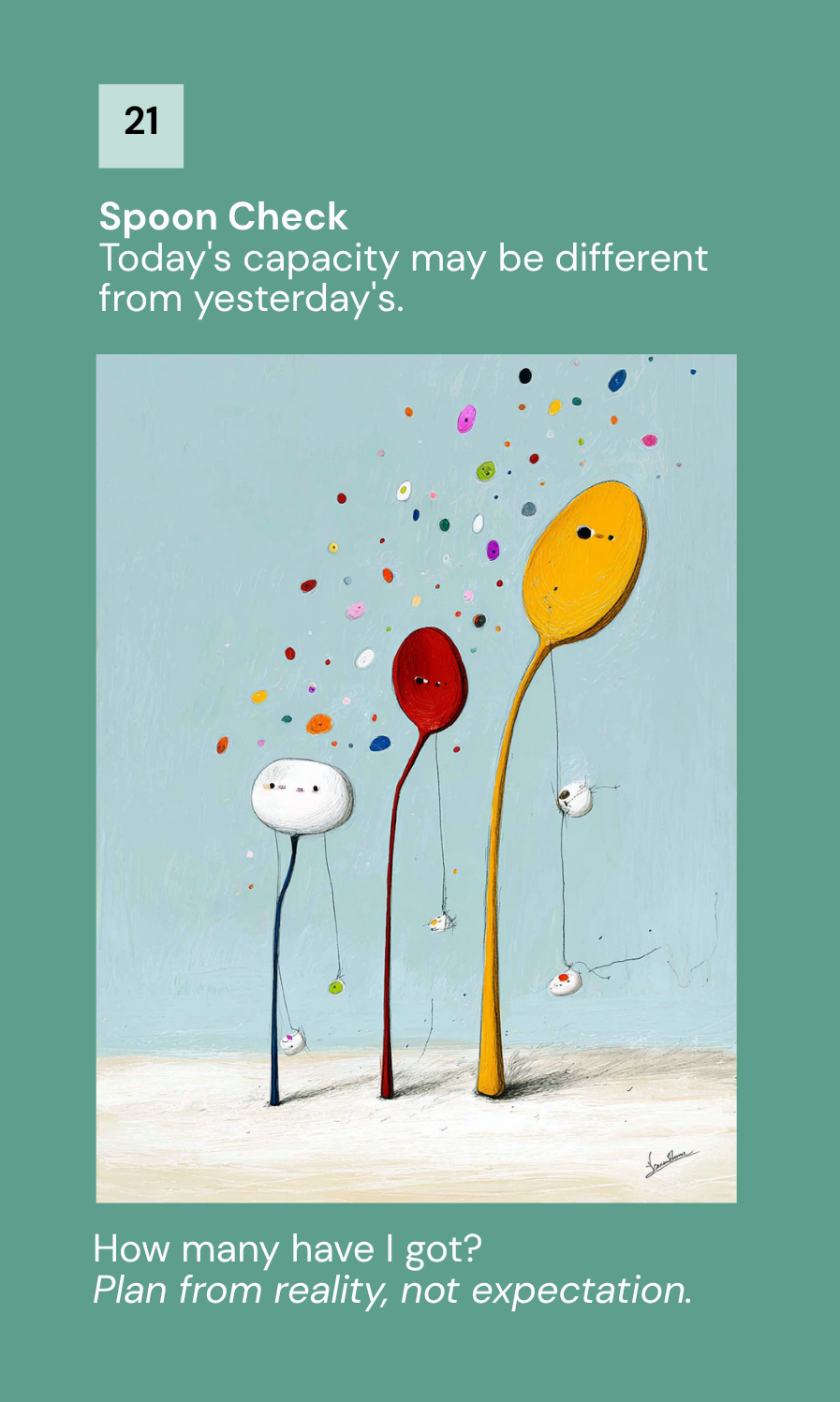
21. Spoon Check. How many have I got?
Context Energy is not constant, even if the calendar is. The demands of a Tuesday don't adjust to match what the body actually has available. Without a brief check-in, it's easy to overcommit in the morning and crash before the day is through.
What This Card Offers This card reminds you to measure from reality, not from yesterday's version of you. You don't need an exact number. Just a sense of whether you have a full tank, half, or very little. Plan from that. You might decide to reduce the list, delay something, or protect a little energy for later.
Support Capacity shifts day to day. Today's reserves may be different from yesterday's. Planning from reality is more sustainable than planning from expectation. A rough estimate is enough.
Quiet Reassurance You are allowed to plan from where you actually are. Reality is a better starting point than expectation.
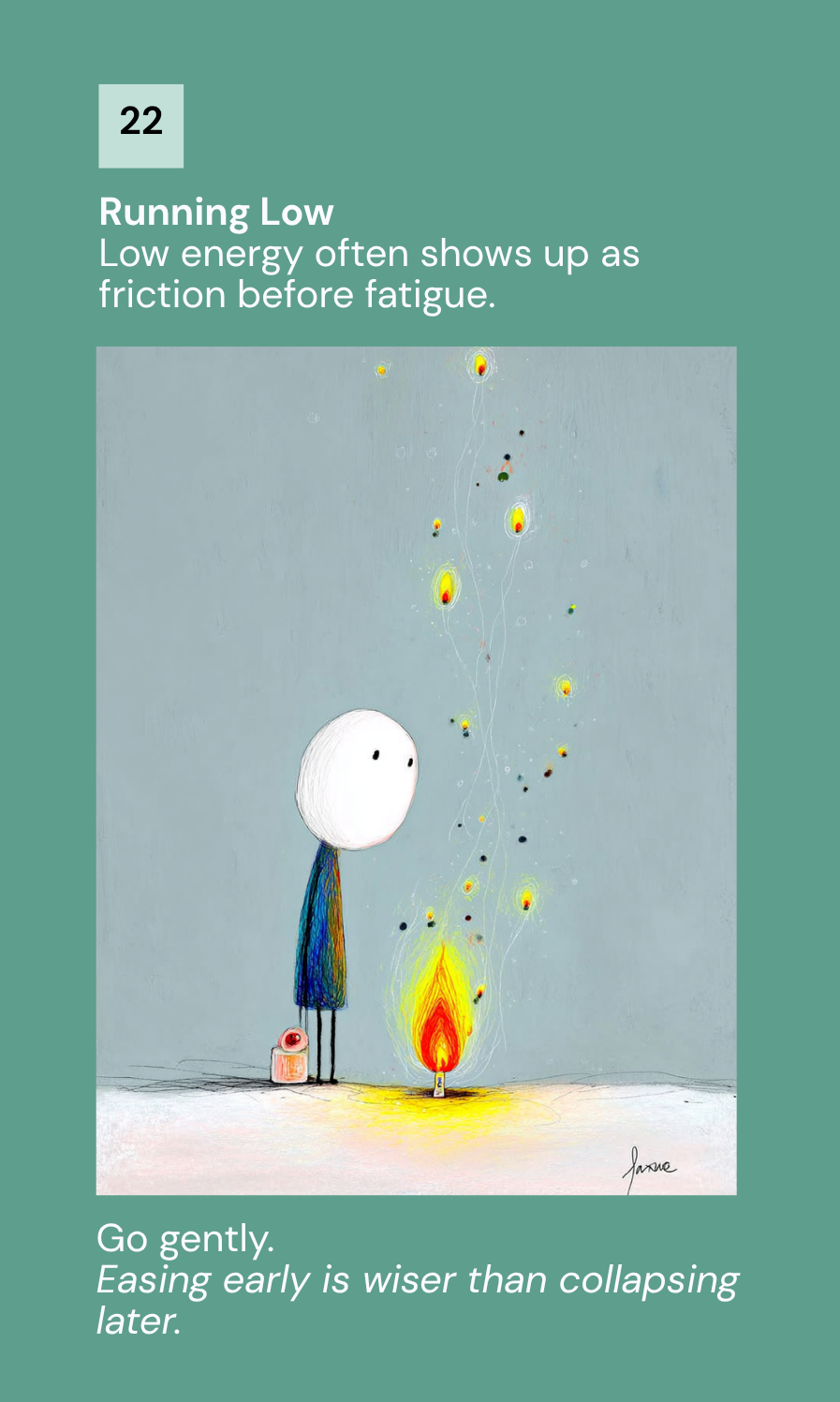
22. Running Low. Go gently.
Context Low energy doesn't always feel dramatic. It can show up as subtle friction, increased sensitivity, or a quiet difficulty in making decisions. These signals often appear before the more obvious signs of exhaustion, but they are just as real.
What This Card Offers This card suggests easing early rather than collapsing later. Shorten the task. Insert a break. Lower the demand if you can. What you preserve now is available for what comes after.
Support You are partway through your reserves. The signs may be subtle: irritability, fogginess, slower thinking. Reducing the demand now is wiser than collapsing later. A break before you need one is still a break.
Quiet Reassurance Easing early is not giving up. It is managing what you have wisely.
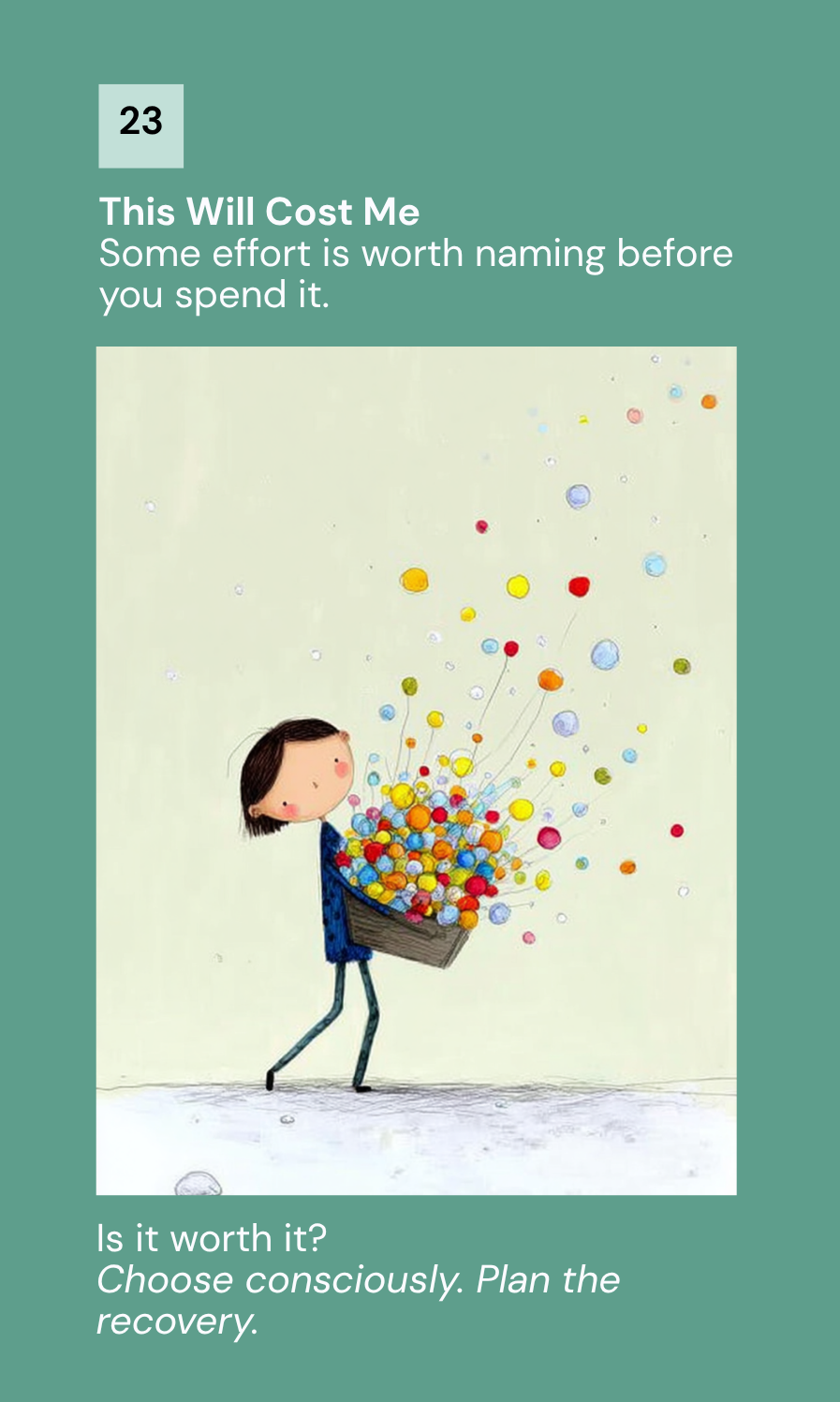
23. This Will Cost Me. Is it worth it?
Context Some tasks are high-cost. That doesn't make them wrong or avoidable. But the exchange should be deliberate rather than unconscious. When effort is spent without awareness, the recovery cost often comes as a surprise.
What This Card Offers This card invites you to weigh the benefit against the drain before you commit. Consider what you'll need afterward to recover. Scheduling rest or lighter activity after a high-cost task often makes the effort sustainable in a way that pure willpower doesn't.
Support The next action requires real effort. The cost is worth naming before proceeding. You can still choose it — but do so consciously. Planning recovery in advance is part of the decision.
Quiet Reassurance Acknowledging the cost is not weakness. It is part of making a sustainable choice.
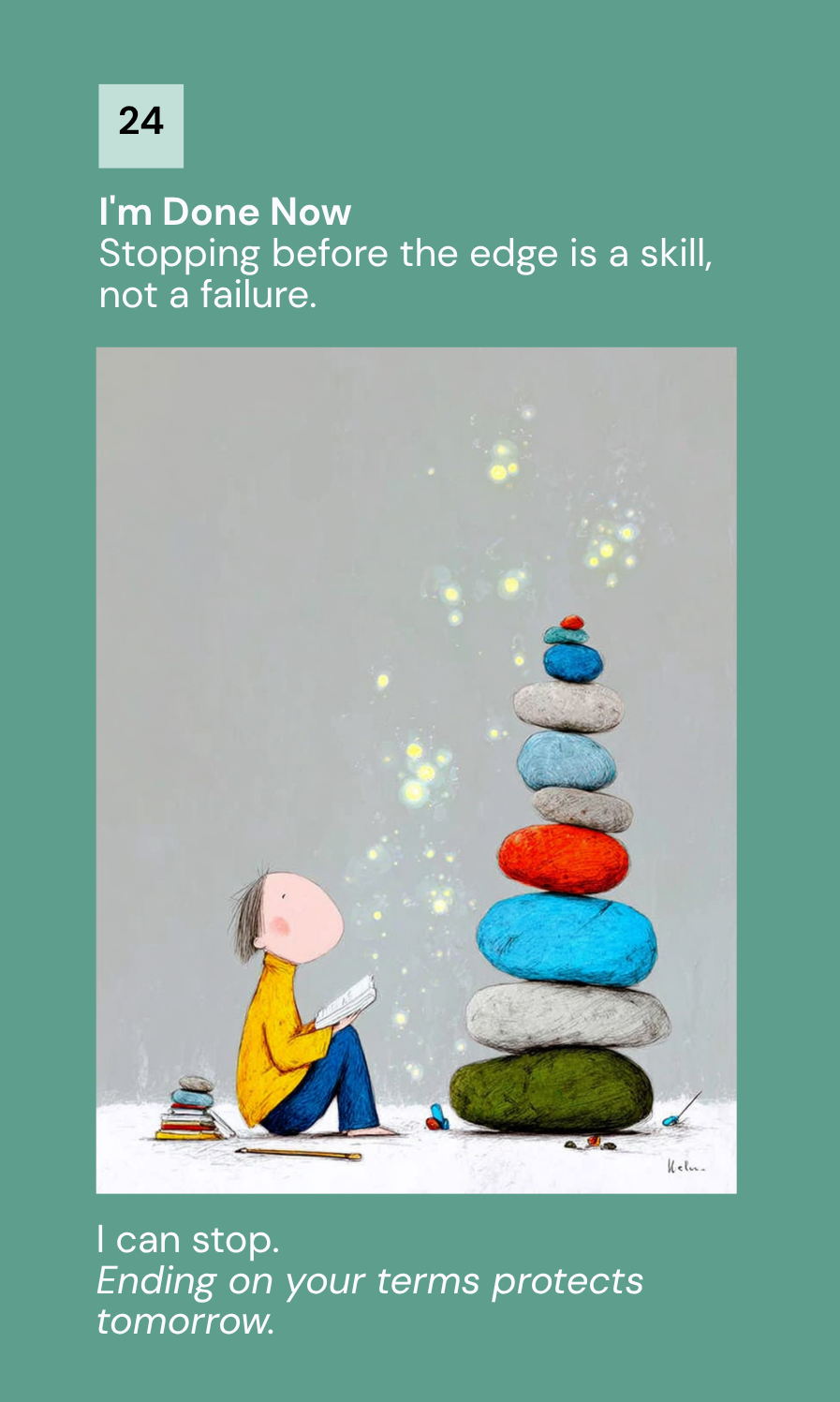
24. I'm Done Now. I can stop.
Context Stopping before exhaustion is a skill. The instinct to push through past the edge is common, but it often results in diminishing returns, increased errors, and a longer recovery. Recognising the limit before it becomes a crisis is a real form of self-management.
What This Card Offers This card validates recognising the limit without guilt. You can pause here. Stand up. Close the loop on what's unfinished with a note or a brief record, so it doesn't have to be held in your head. Ending on your own terms, before you've fully depleted, builds trust in your own pacing over time.
Support You have reached your edge. Continuing may lead to shutdown or resentment. Stopping here is a legitimate decision. You can return later if needed.
Quiet Reassurance Stopping is not failure. It is recognising your limit before it becomes a crisis.
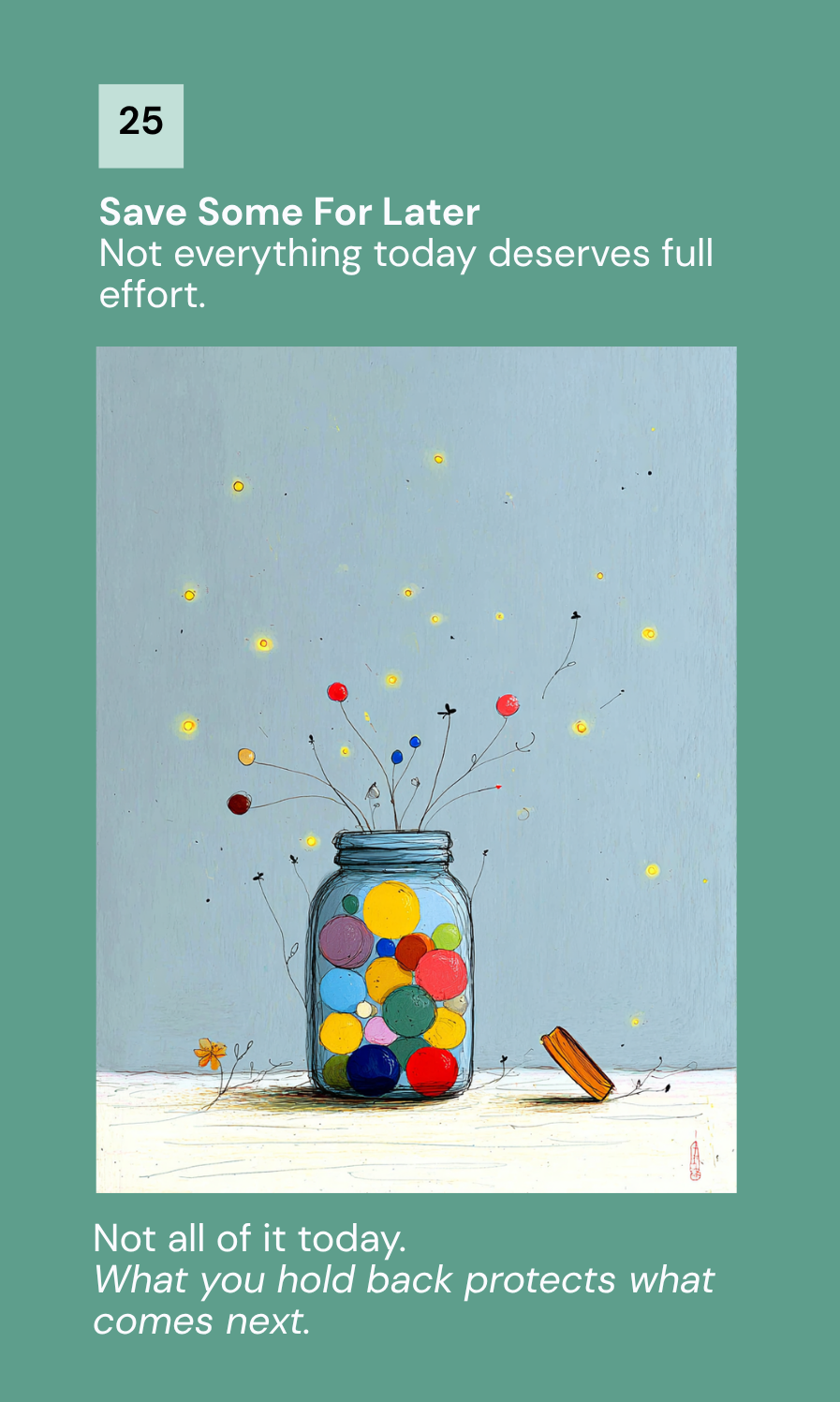
25. Save Some for Later. Not all of it today.
Context Energy overspending can feel productive in the moment. When capacity feels higher than usual, there's often an impulse to use it all. But consistent overdraw leads to a pattern where recovery days become increasingly necessary and functional days become fewer.
What This Card Offers This card supports conservation. Decide what truly needs full effort and what can run at seventy percent. Leave a little in reserve. Holding something back isn't laziness — it's maintaining continuity across more than just today.
Support You don't have to spend every available ounce. Leaving something in reserve is a form of planning. Not everything requires full effort. What you hold back today protects tomorrow.
Quiet Reassurance Holding something back is a form of care for future-you. Conservation is a strategy, not a failure.
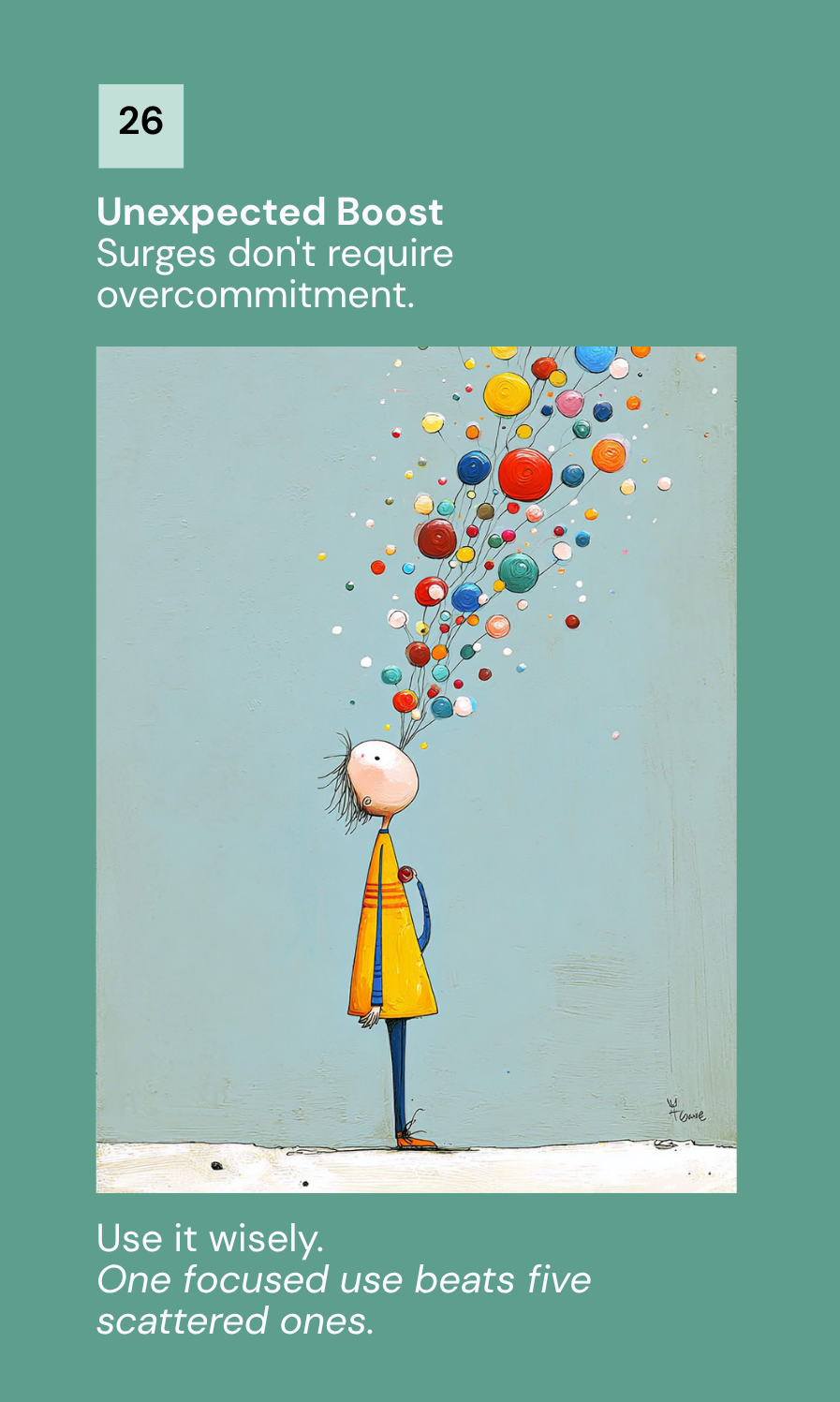
26. Unexpected Boost. Use it wisely.
Context Surges of unexpected energy can create a temptation to overcommit. When capacity suddenly feels higher, it's easy to stack tasks, say yes to more, or try to make up for previous low-energy days. This often leads to overdraw and a return to depletion.
What This Card Offers This card encourages focused use rather than scattering. Choose one or two meaningful things to direct the energy toward. Finishing something that matters or making genuine progress on a single task often serves you better than five impulsive starts.
Support There is more energy than you expected. This is real and available to you. Choose intentionally where to direct it. You don't need to tackle everything at once.
Quiet Reassurance More energy doesn't require more commitments. Focused use often serves better than scattered use.
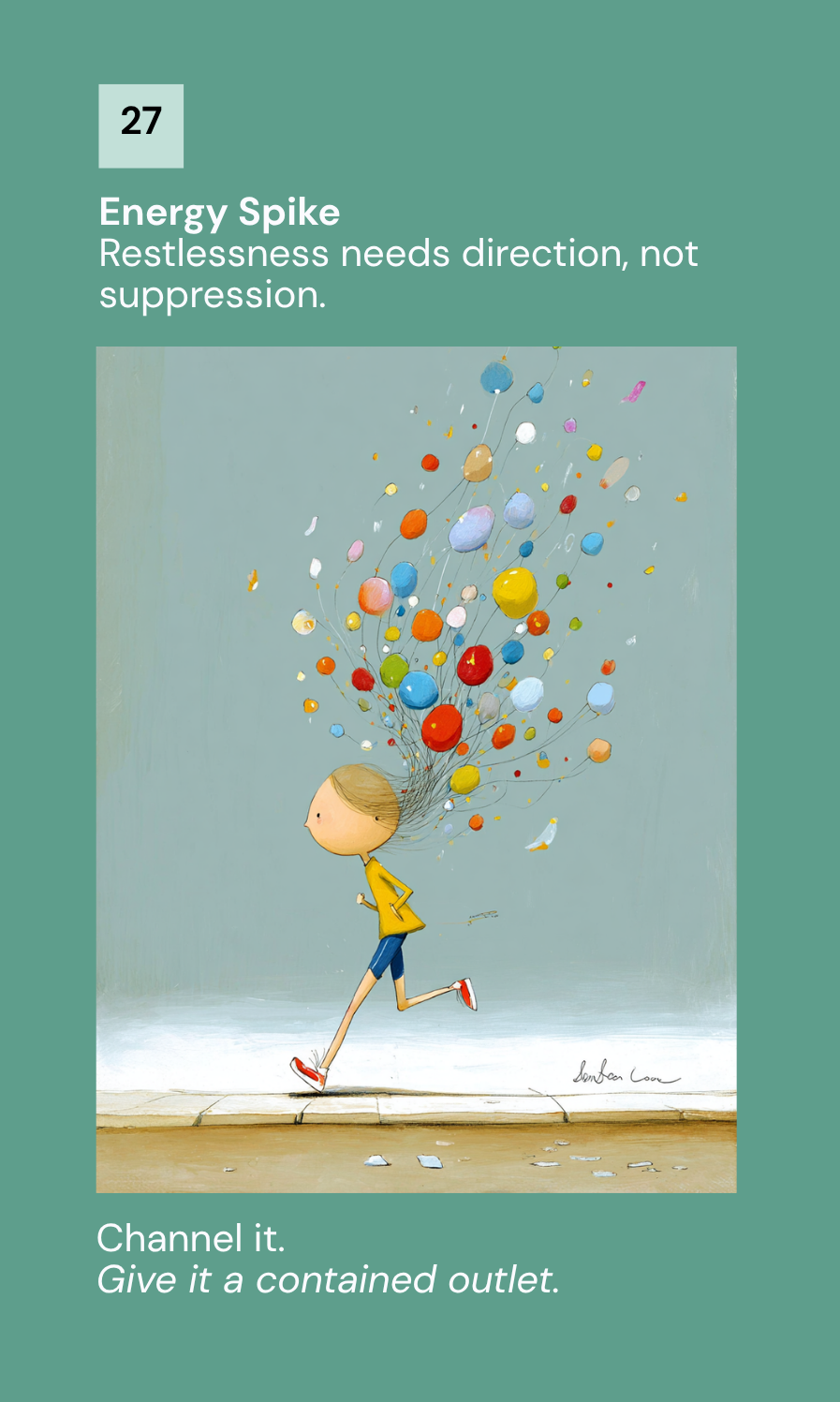
27. Energy Spike. Channel it.
Context Spikes of energy or restlessness can feel uncomfortable if they have no outlet. They aren't necessarily negative. But without direction, they can spill into irritability, impulsive decisions, or unfocused activity that doesn't actually discharge the feeling.
What This Card Offers This card suggests giving the surge a defined outlet. Move your body briefly. Write quickly without editing. Direct it somewhere specific and contained. A short burst of intense focus can channel the energy without scattering it.
Support Restlessness or intensity is present. The energy is real but needs direction. Give it a contained outlet. It doesn't have to become conflict or distraction.
Quiet Reassurance High energy is not a problem to manage. It is a resource to direct.
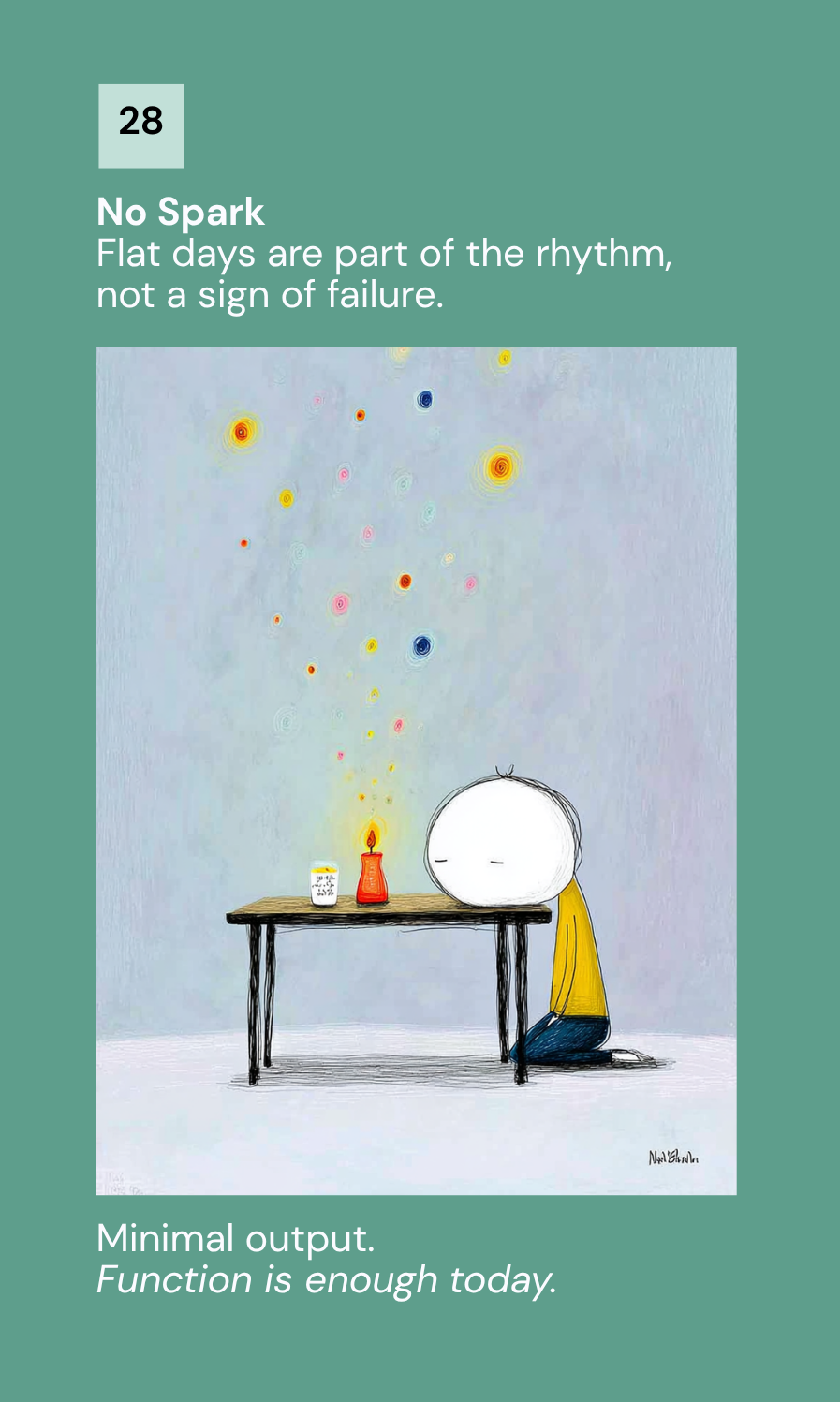
28. No Spark. Minimal output.
Context Flat energy doesn't mean failure. It often signals recovery in progress, delayed fatigue from recent effort, or simply a day where the system is running at low rather than high. These days are part of a normal rhythm, not an exception to it.
What This Card Offers This card supports low-demand activity rather than forcing inspiration. Aim for maintenance, not innovation. Choose the simplest possible version of the task. Send the brief version of the email. Do the minimum viable action. Function is genuinely enough on a no-spark day.
Support Ignition is low today. Inspiration has not arrived. Maintenance is a valid goal. Function is enough.
Quiet Reassurance Flat days are part of the rhythm, not a sign something is wrong. Maintenance is real work.
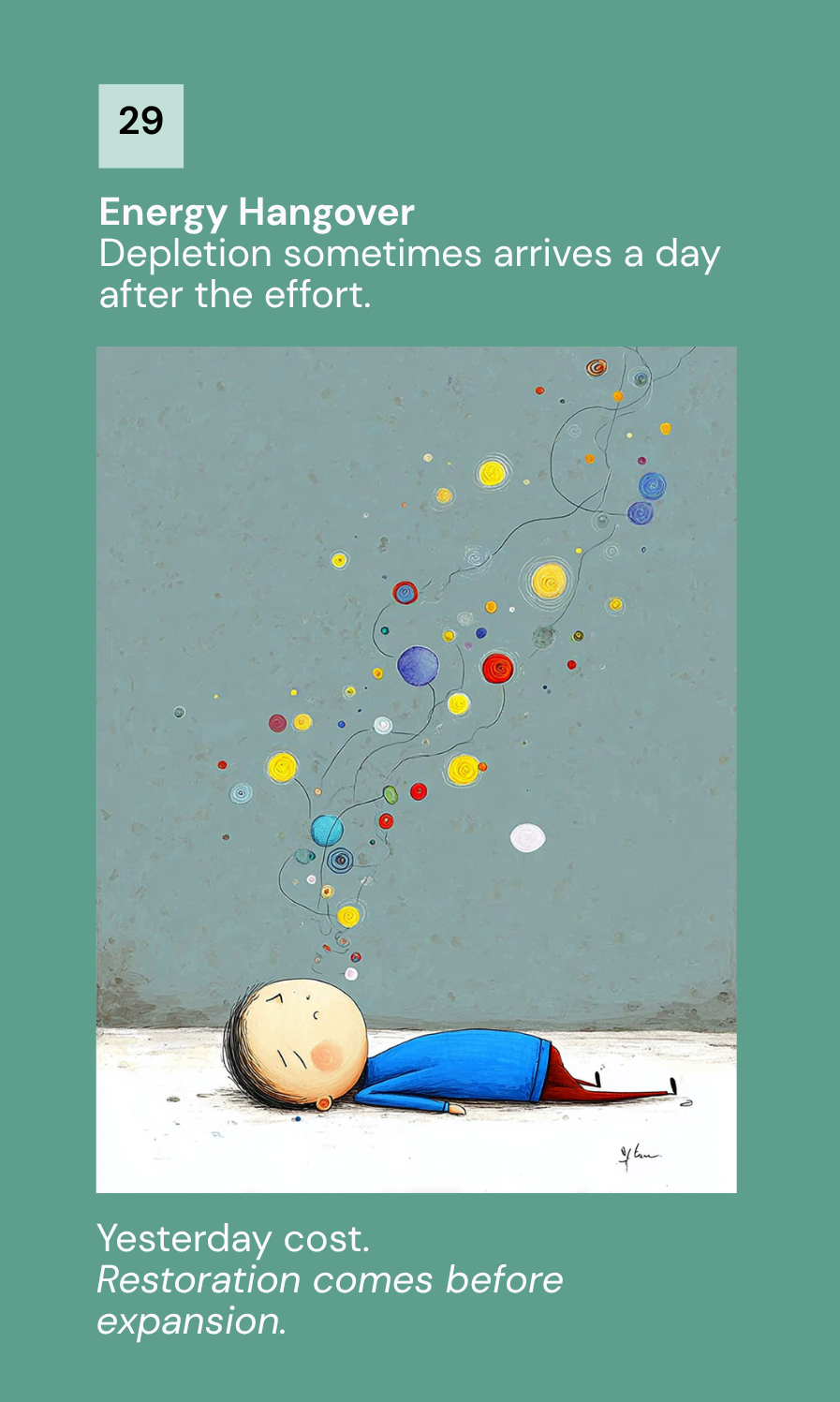
29. Energy Hangover. Yesterday cost.
Context Sometimes the cost of a high-effort period doesn't register immediately. The day after a demanding event, a long social engagement, or sustained pressure can feel disproportionately difficult — not because anything new has gone wrong, but because the previous effort is settling.
What This Card Offers This card normalises delayed fatigue. Adjust expectations for today downward. Prioritise restoration over expansion. Looking after today's energy, rather than trying to push through again, helps stabilise the pattern and prevents the cycle from deepening.
Support You are feeling the after-effects of recent effort. Depletion sometimes arrives a day late. Adjust expectations downward today. Restoration comes before expansion.
Quiet Reassurance Delayed depletion is normal. Giving yourself today helps tomorrow.
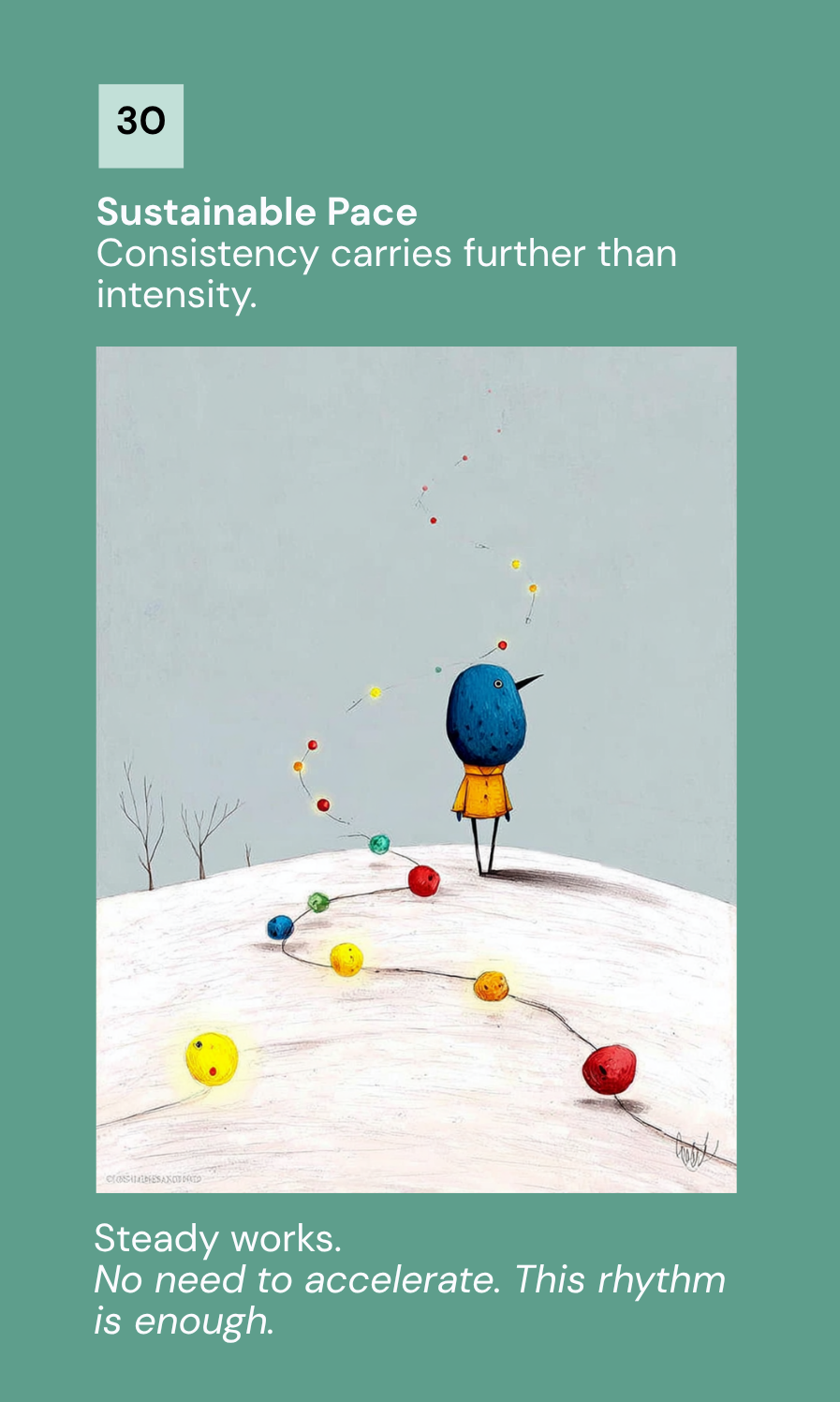
30. Sustainable Pace. Steady works.
Context Consistency often outperforms intensity. A sustainable pace maintained across time produces more than repeated cycles of sprint and crash. The middle speed — neither urgent nor stalled — is frequently where the most gets done without the highest cost.
What This Card Offers This card affirms the middle ground. You don't need a spike to make progress. Quiet momentum carries further than effort applied in intense bursts. Maintain the rhythm that feels stable. That is exactly the pace worth protecting.
Support You are moving at a manageable speed. There is no need to accelerate. The rhythm feels stable. This is enough.
Quiet Reassurance Sustainable doesn't mean slow. It means continuing without collapse.
Full Guidebook
-
Today Suit
Cards 1 - 10
-
Sensory Suit
Cards 11 - 20
-
Energy Suit
Cards 21 - 30
-
People Suit
Cards 31 - 40
-
Care Suit
Cards 41 - 50