
Care. What helps things continue.
The Care cards focus on recovery, kindness, and continuation. They appear when something has gone wrong, when energy has been spent, or when the mind begins turning against itself. These cards soften that moment. Rather than fixing everything, they support the simple act of continuing. Care is not a reward after productivity. It is part of staying steady over time.
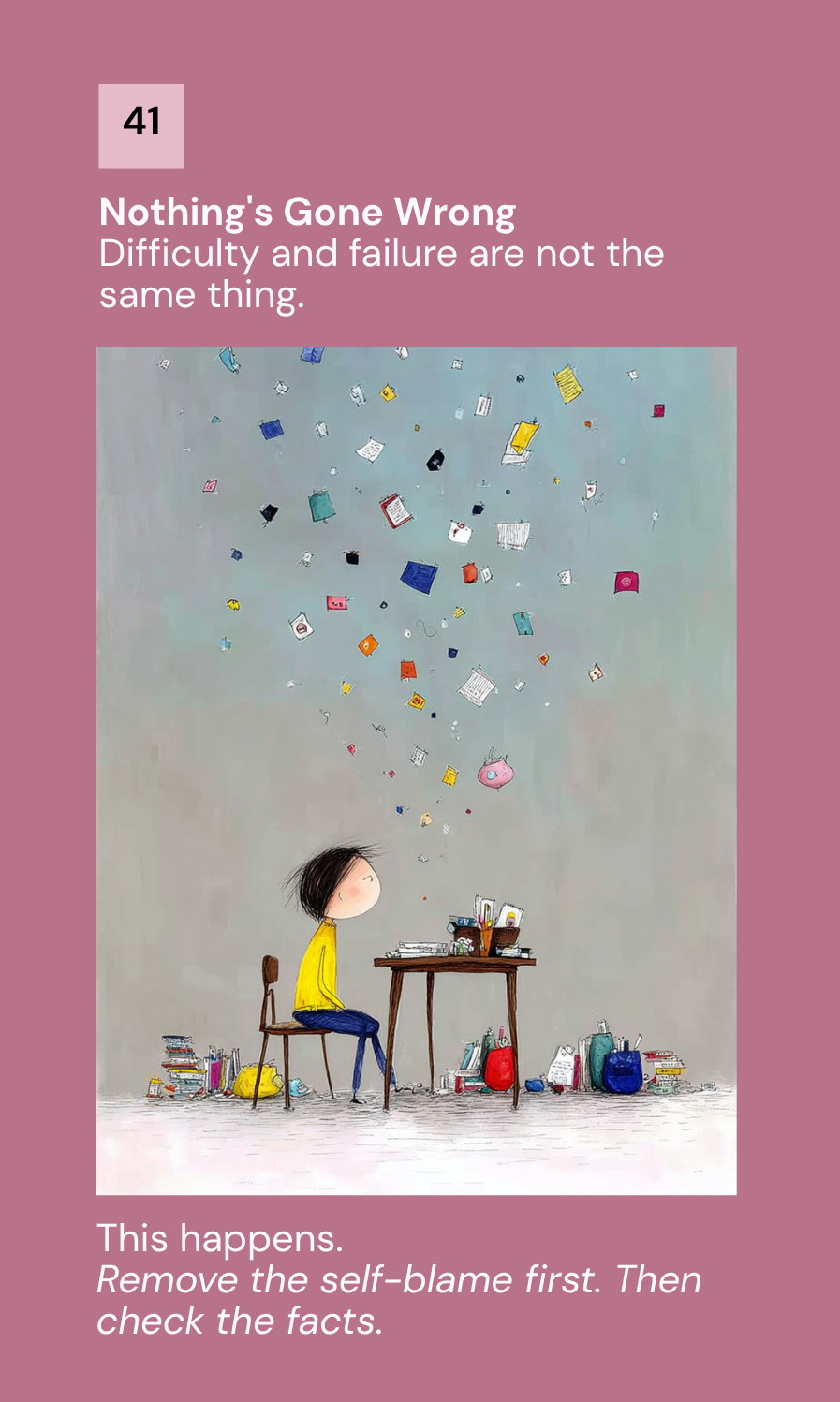
41. Nothing's Gone Wrong. This happens.
Context Many spirals begin with the assumption that something has gone wrong. That reflex — jumping from discomfort to failure — can amplify difficulty significantly. Often what's happening is strain, not disaster. But once the story of failure takes hold, it shapes everything that follows.
What This Card Offers This card interrupts that reflex. Before reacting, pause and remove the self-blame. Check the actual facts. What has happened? What hasn't? Naming that difference lowers intensity. Start with neutrality. Then decide what, if anything, is needed.
Support Difficulty is not automatically failure. Remove self-blame before you assess the situation. Check the facts before drawing conclusions. You may just be tired, overstimulated, or at capacity.
Quiet Reassurance Difficulty and failure are not the same thing. Start with what is actually true.
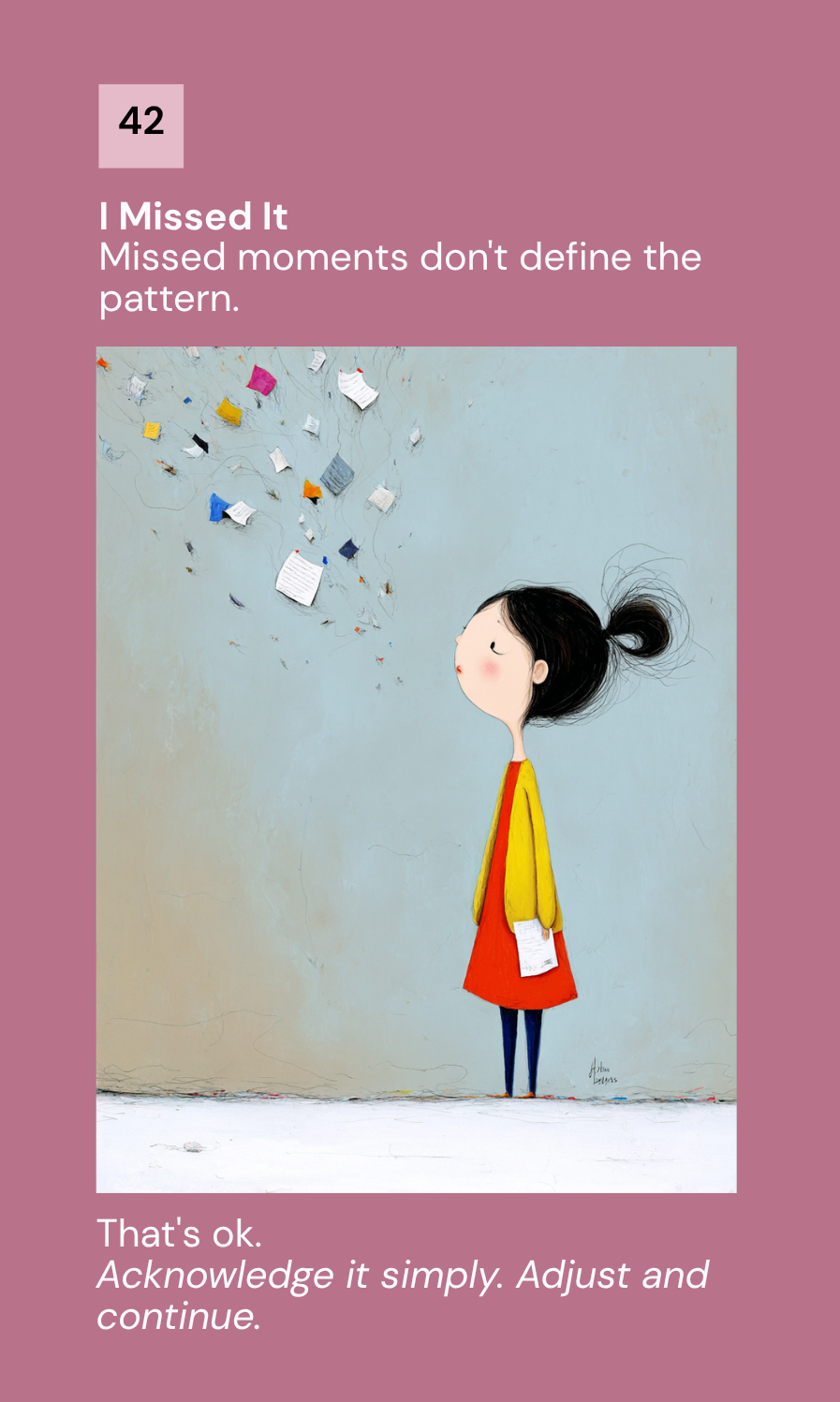
42. I Missed It. That's ok.
Context Missed details can trigger disproportionate self-criticism, particularly when there is already a high standard for performance or reliability. The gap between what was intended and what happened can feel much larger than it actually is.
What This Card Offers This card reduces that spike. Repair does not require punishment. Acknowledge what happened simply. Fix what you can. Move on without ceremony. The moment does not define the pattern, and the pattern does not define you.
Support You forgot, were late, or dropped something. It happens. Acknowledge it without escalating. Fix what you can and leave the rest.
Quiet Reassurance Missing something does not mean you are unreliable. Adjust and continue.
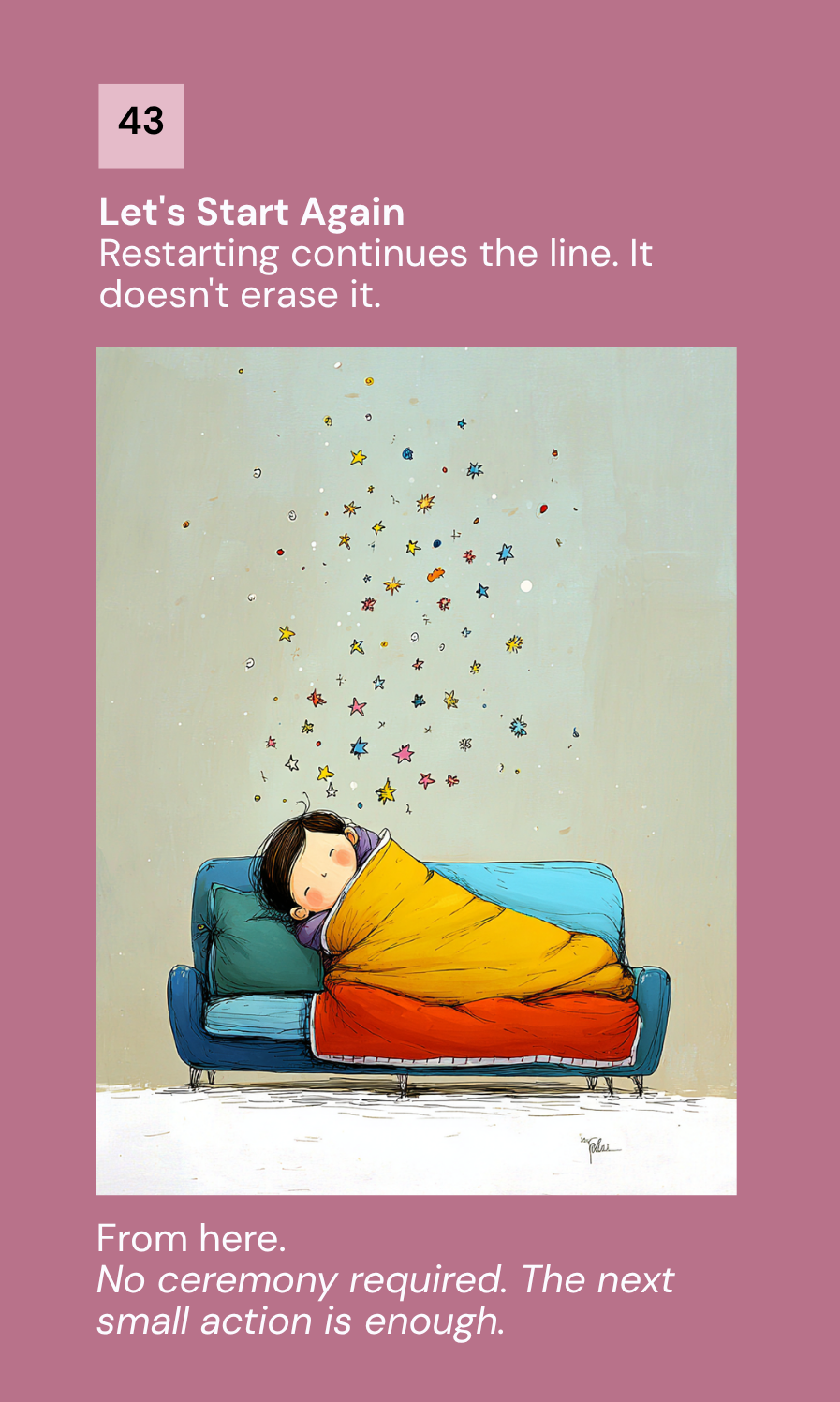
43. Let's Start Again. From here.
Context All-or-nothing thinking often turns disruption into abandonment. If the routine broke, the thinking goes, it's all lost. If the plan slipped, there's no point continuing. This pattern is common and it costs real continuity.
What This Card Offers This card restores flexibility. Restarting does not erase what came before. It simply continues the line from where you are now. No ceremony is required. Choose the next small action and begin there. That is enough.
Support The plan slipped or the routine broke. That doesn't mean it's over. Reset without ceremony. The next small action is available.
Quiet Reassurance Starting again is not starting over from zero. You bring everything with you.
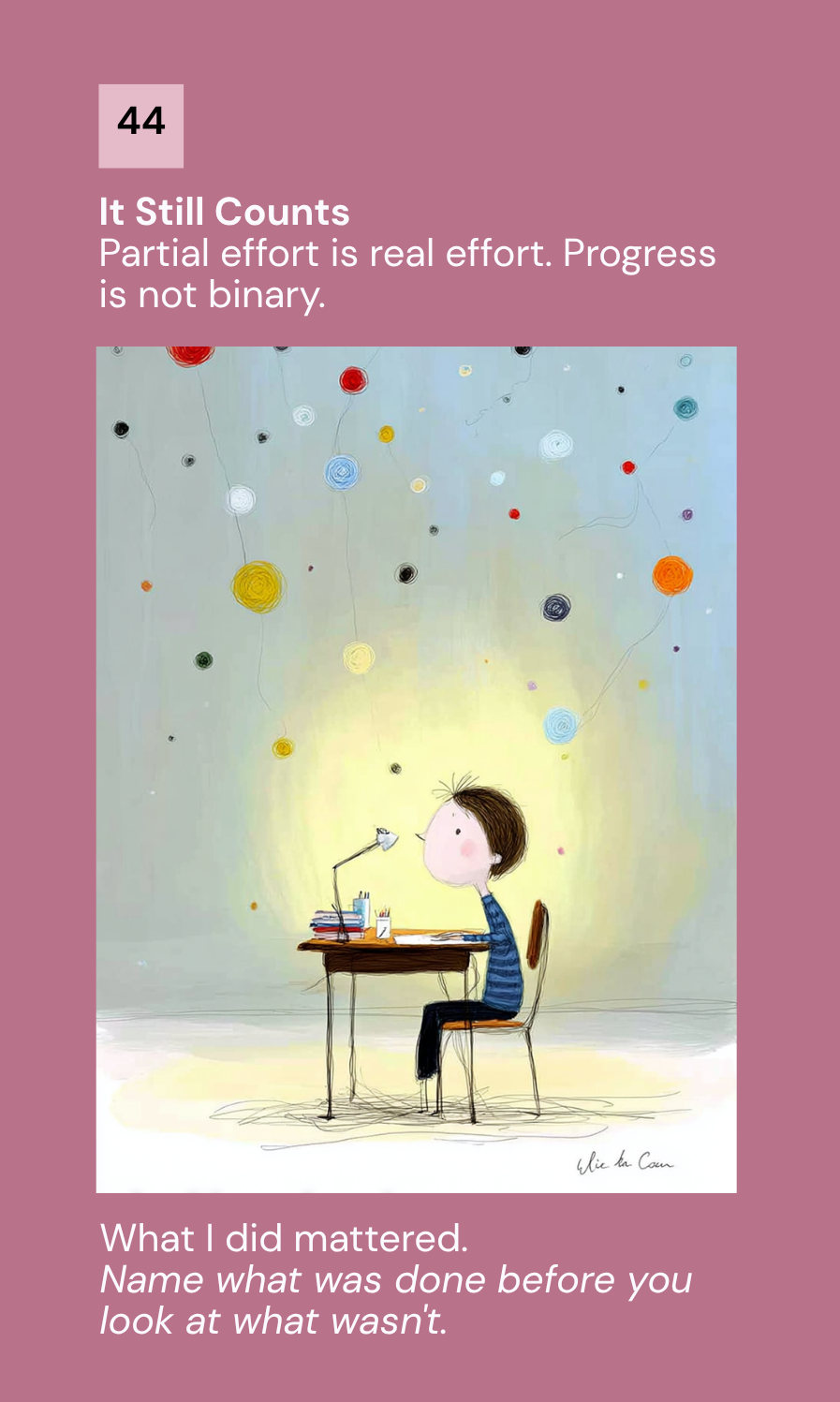
44. It Still Counts. What I did mattered.
Context Binary thinking minimises incremental progress. If it wasn't finished, it doesn't count. If it wasn't done perfectly, it wasn't worth anything. This framing is both inaccurate and costly. Small actions accumulate into real change over time.
What This Card Offers This card reframes that pattern. The half-finished task, the brief attempt, the partial completion — these are all real contributions. Name what was done before you assess what wasn't. Completion is not the only measure of value.
Support Partial effort is real effort. Even if it wasn't complete, it contributed. Progress is not binary. Name what was done before you focus on what wasn't.
Quiet Reassurance Partial progress is still progress. What you did counts.
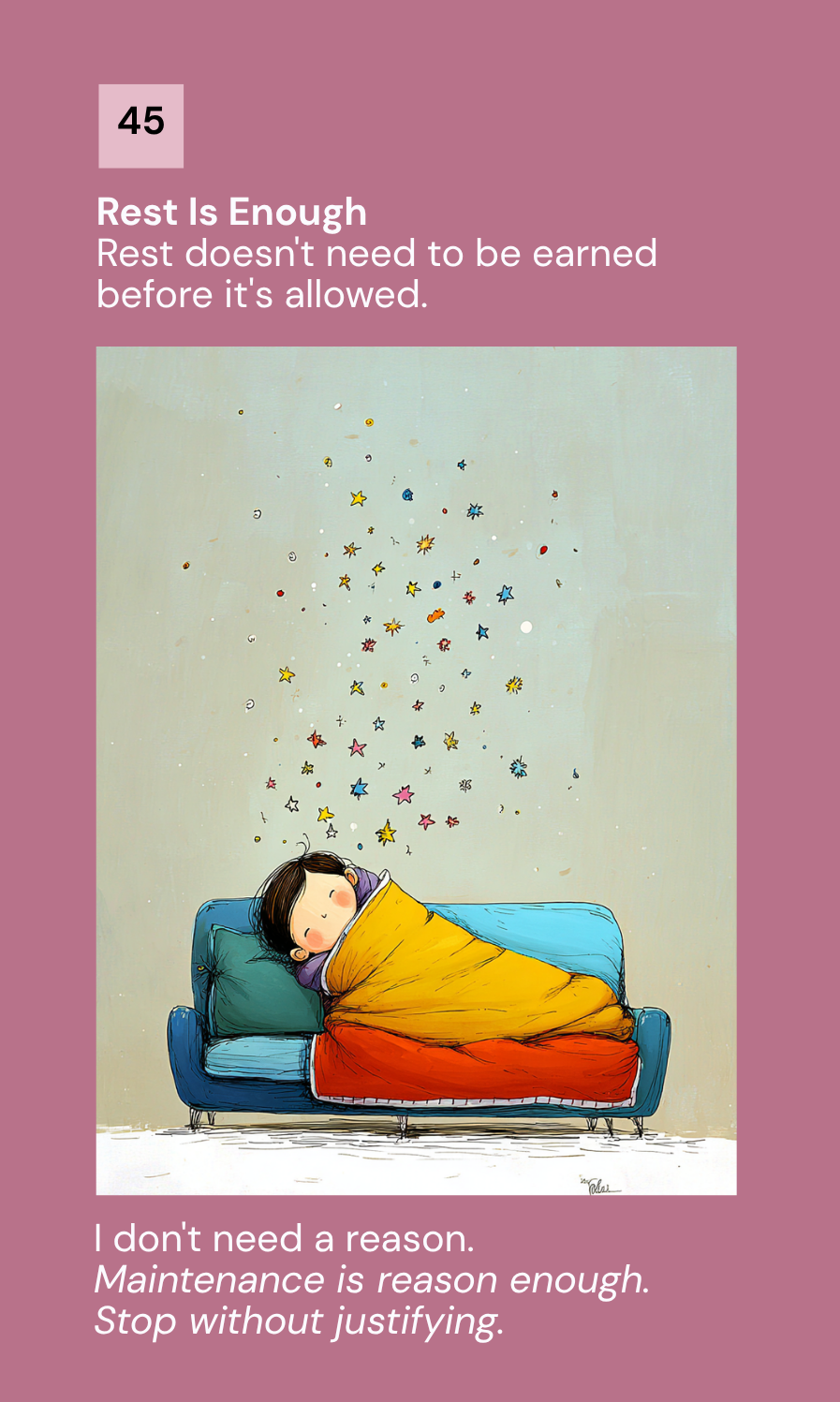
45. Rest Is Enough. I don't need a reason.
Context Rest often gets postponed until exhaustion makes it unavoidable. The internal standard can be that rest must be earned through sufficient output, or justified by visible need. This standard quietly prevents the kind of regular restoration that sustains capacity.
What This Card Offers This card legitimises pre-emptive pause. You don't need to be exhausted before you are allowed to stop. Sit down. Lie down. Close your eyes. Even ten minutes shifts the system. Maintenance is reason enough. You don't need to justify recovery.
Support You can stop without earning it first. Rest doesn't require a preceding achievement. Maintenance is a legitimate reason. You are allowed to pause.
Quiet Reassurance Rest before exhaustion is also rest. You don't need to earn it.
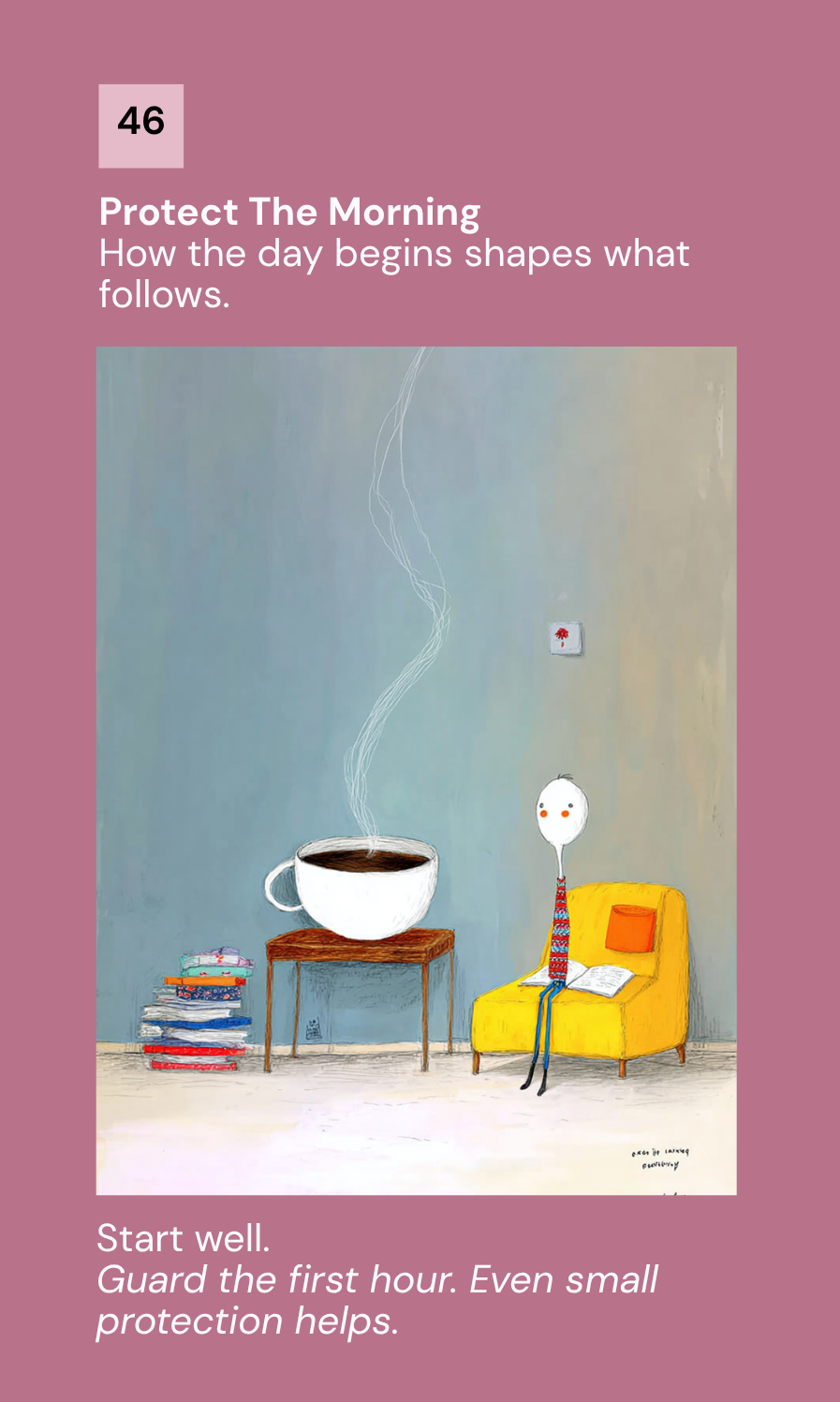
46. Protect the Morning. Start well.
Context Mornings are often vulnerable windows. When input begins immediately — messages, demands, news, noise — the nervous system moves into a reactive state before it has fully settled into the day. This can shape the difficulty of everything that follows.
What This Card Offers This card encourages intentional entry into the day. Guard the first hour if you can. Limit input. Delay messages. Choose one slow or low-stakes action to begin. Even small protection of the morning window stabilises what comes after it.
Support How you begin shapes the tone of what follows. The first hour is often the most influential. Guard it if you can. Even small protection makes a difference.
Quiet Reassurance The morning sets a tone. Protecting it is worth the effort.
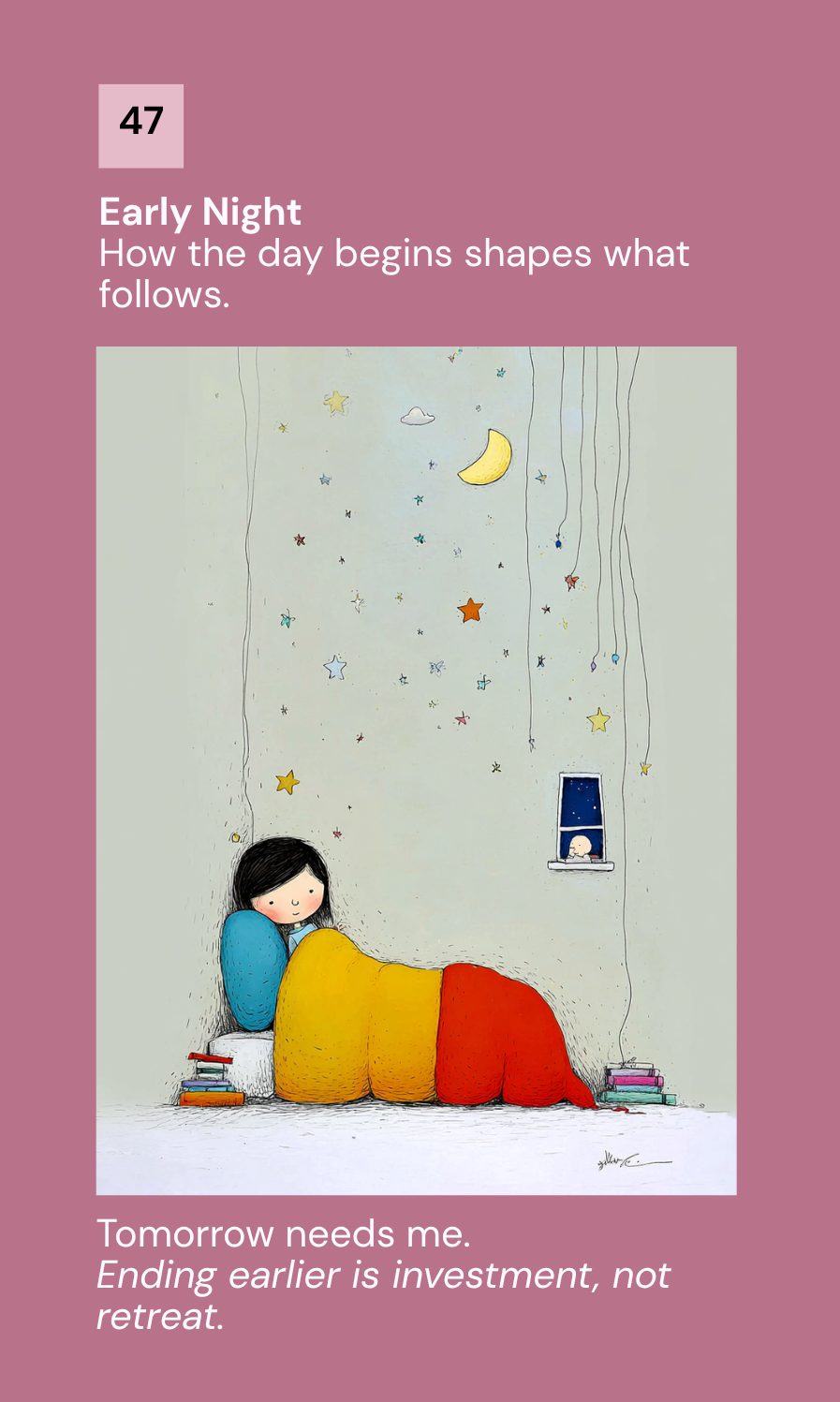
47. Early Night. Tomorrow needs me.
Context Sleep debt accumulates gradually and affects cognitive clarity, emotional regulation, and sensory tolerance in ways that aren't always obviously connected to sleep. The difficulty of tomorrow often begins in the choices of tonight.
What This Card Offers This card connects present decisions with future steadiness. Wind down earlier than usual. Reduce stimulation. Close the day gently rather than letting it trail off. Ending earlier is not retreat. It is investing in the version of you that tomorrow requires.
Support Future capacity depends on tonight's choices. Sleep debt compounds quietly. Winding down earlier is an investment. Ending the day gently is a form of care.
Quiet Reassurance Ending the day early is care for tomorrow. It is not giving up on today.
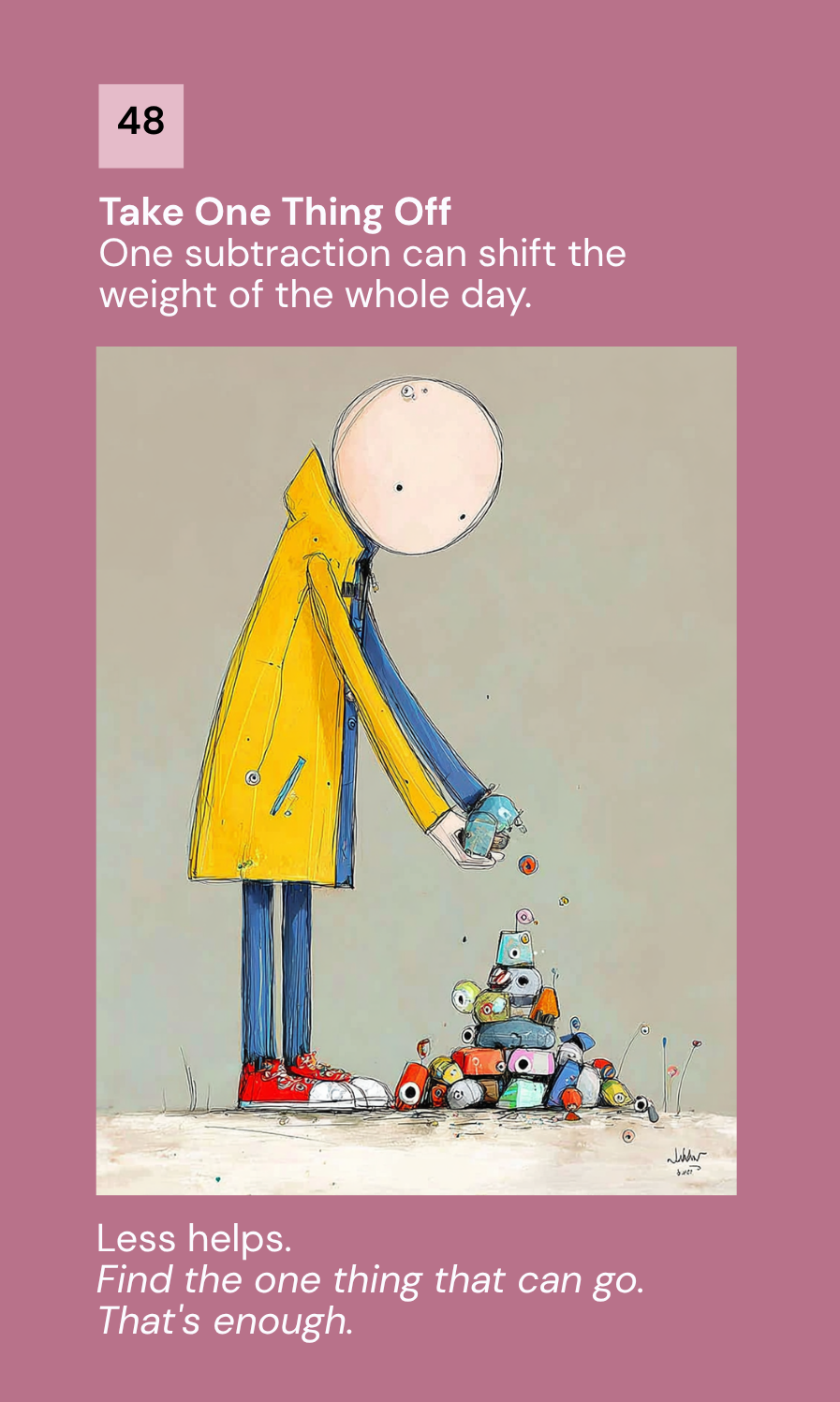
48. Take One Thing Off. Less helps.
Context Overload often feels immovable. When everything on the list feels essential, the idea of removing anything can seem impossible. But this perception is often inaccurate — there is almost always one thing that is less essential than the others.
What This Card Offers This card introduces reduction as a real strategy. One subtraction can shift the weight of the entire day. Look at the list and find the one thing that could go, or be shortened, or be delegated. Lighten it by even one item. That is enough to start.
Support Remove a single demand from the list. Cancel one nonessential task. Shorten something. One subtraction can shift the whole day.
Quiet Reassurance One removal matters. Lighter is easier to carry.
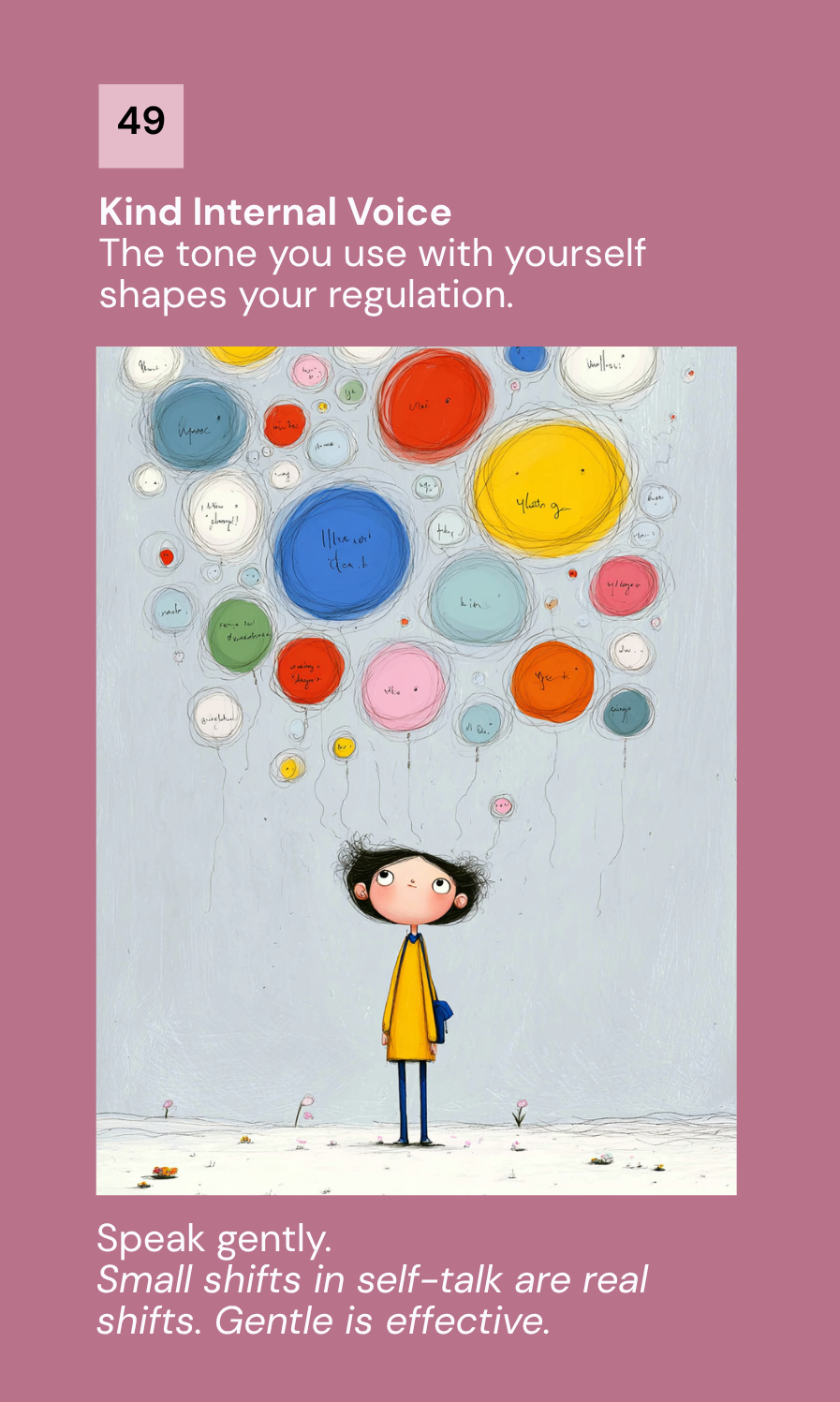
49. Kind Internal Voice. Speak gently.
Context Internal language shapes regulation. Harsh self-talk increases the physiological stress response in measurable ways. The voice that says "you should have known better" or "why can't you just" is not neutral. It adds to the load.
What This Card Offers This card invites incremental softening rather than forced positivity. You don't need to tell yourself everything is fine. You just need to lower the temperature of the internal voice slightly. Replace "I should" with "I can try." Replace "why haven't I" with "what would help." Small shifts are enough.
Support Notice the tone you are using with yourself. If it is sharp, soften it slightly. Small shifts in self-talk matter. Gentle is effective.
Quiet Reassurance You don't have to be kind to yourself all at once. A small softening is a real shift.
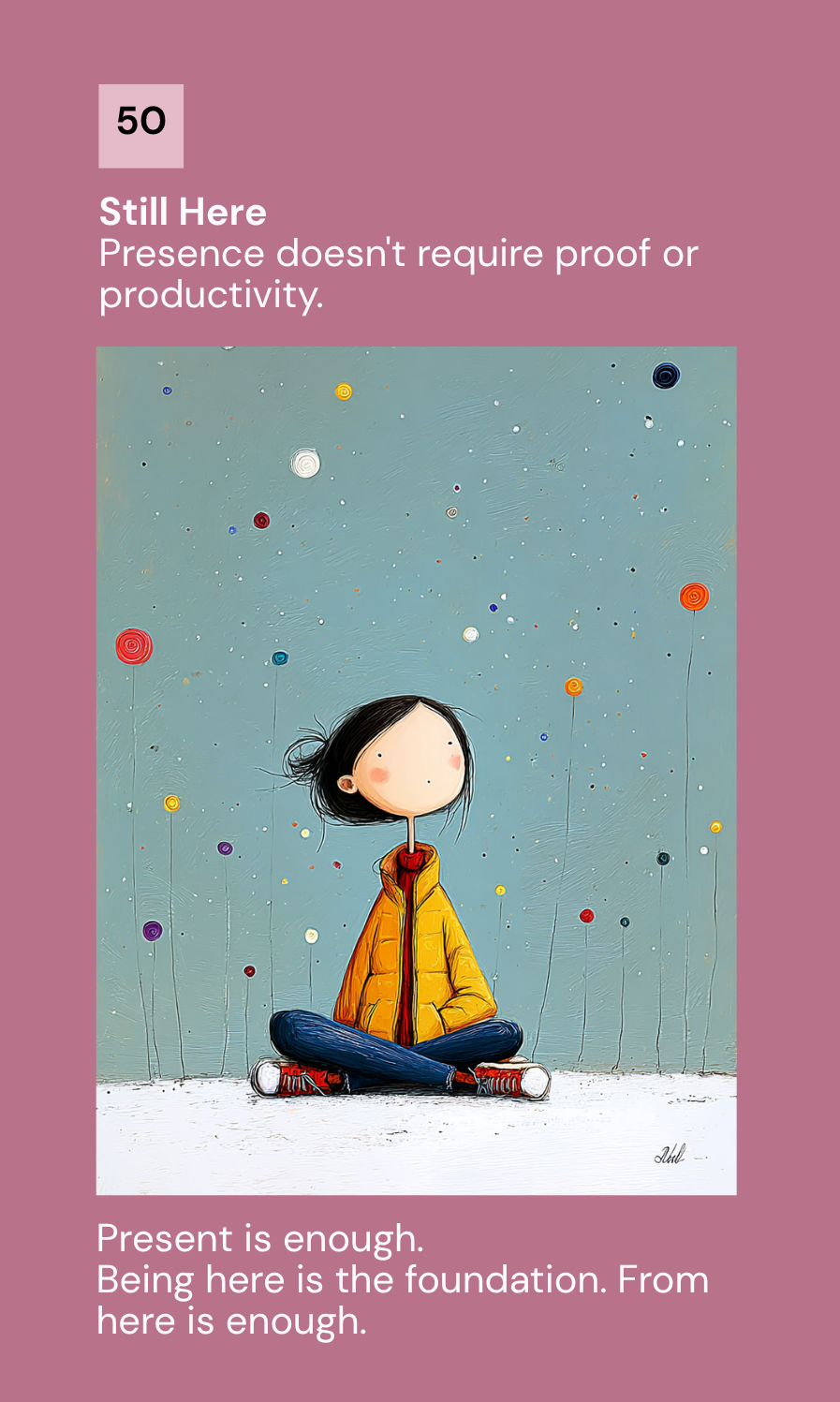
50. Still Here. Present is enough.
Context This card closes the cycle. It isn't about surviving or overcoming. It's about presence. The fact of being here — aware, noticing, choosing to engage with your own experience rather than dismiss it — is already meaningful. You don't need to have achieved anything for that to be true.
What This Card Offers Wherever you are as you draw this card, you are here. That is the foundation. You don't need to be further along, more recovered, more sorted, or more ready. From here is enough of a place to continue from.
Support You are here. That is already something. Being present doesn't require proof. You don't need to be further along.
Quiet Reassurance You don't need to have it together to be present. Here is a perfectly good place to start from.
Full Guidebook
-
Today Suit
Cards 1 - 10
-
Sensory Suit
Cards 11 - 20
-
Energy Suit
Cards 21 - 30
-
People Suit
Cards 31 - 40
-
Care Suit
Cards 41 - 50